Blog · 2026-09-21
Why Zillow's Rhode Island Estimate Is Often Wrong (An Appraiser Explains)
Almost every listing conversation I have now starts the same way: someone reads me a number off their phone. Sometimes that number is close. Often it is off by enough to cost real money, in either direction. I have spent 25 years appraising and brokering property in Rhode Island, and the reason automated estimates struggle here is not that the math is bad. It is that Rhode Island housing stock is unusually hard to model, and the model cannot see the things that actually move value.
What an automated estimate actually is
An automated valuation model takes public record data on your house, finds recent nearby sales the algorithm considers similar, and adjusts statistically. It never enters the property. It does not know whether the kitchen was redone in 2004 or last spring, whether the roof is at the end of its life, or whether the third bedroom is really a walk-through. It is an average of houses that share a data profile with yours. On a subdivision of near-identical 1998 colonials that works reasonably well. Rhode Island has very few of those.
Reason one: our housing stock is old and varied
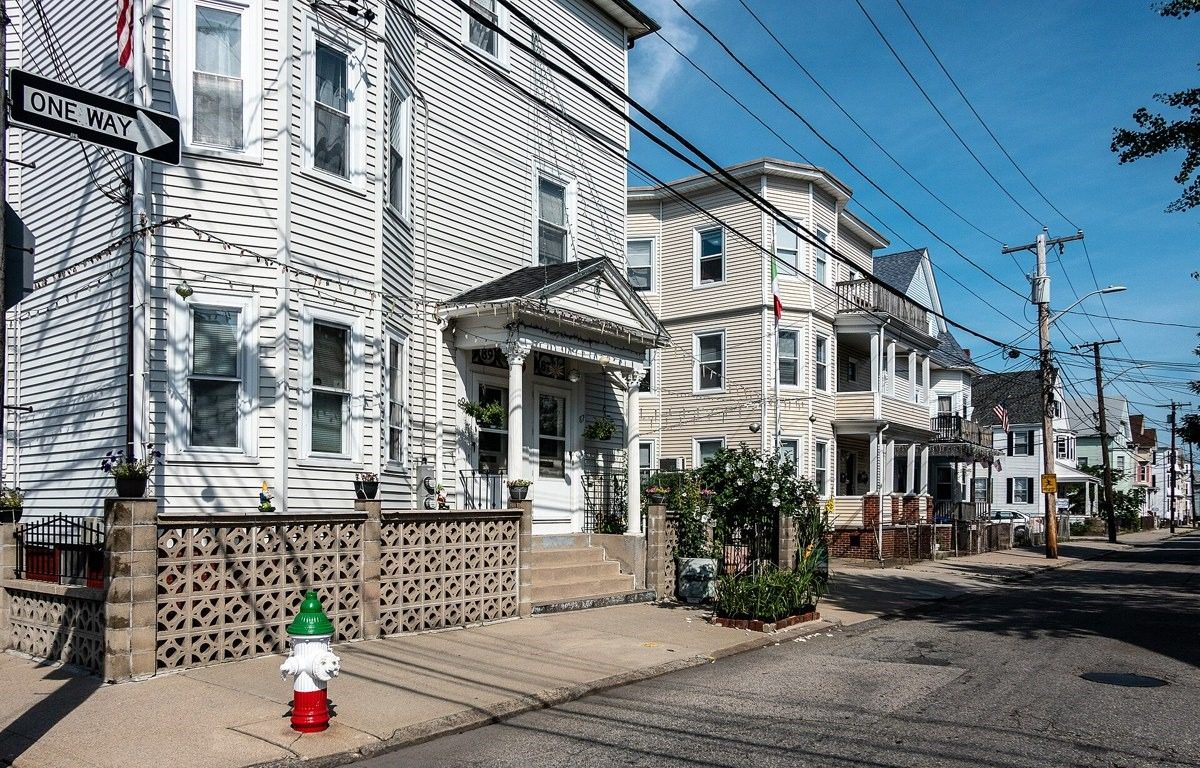
Walk a single block in Providence, Pawtucket or Woonsocket and you will find a 1900 three-decker, a 1925 bungalow, a 1955 ranch and a gut renovation that sold last year. Public records flatten all of that into square footage, bed and bath counts and a year built. The model then treats them as comparable because the data says they are. An appraiser standing in those four houses would not.
Age itself creates variance the model cannot price: knob-and-tube wiring, buried oil tanks, lead paint remediation, plaster versus drywall, original single-pane windows. Two identical-looking houses can be $60,000 apart on mechanical systems alone, and none of that is in a public record.
Reason two: multi-family confuses everything
Rhode Island has one of the highest concentrations of two- and three-family housing in the country, and multi-family value is driven partly by income, not just by comparable sales. Whether the units are vacant at closing, whether the rents are at market or fifty percent below it because a long-term tenant never got an increase, whether the building is deleaded, whether the owner occupies one unit and can use owner-occupant financing: all of that changes the buyer pool and the price. Automated models have no reliable rent data and no view of tenancy status, so their multi-family estimates are the weakest ones I see.
Reason three: unpermitted and mismeasured space
Finished basements and converted attics show up inconsistently in assessor records. Sometimes they inflate the square footage the model uses, which inflates the estimate. Sometimes they are absent entirely, which suppresses it. As an appraiser I measure to standard and treat below-grade finished area differently from above-grade living area, because that is how the market pays for it. The model just uses whatever number the town has on file, which may date back decades.
Reason four: assessment lag
Rhode Island cities and towns revalue on a statutory cycle, not continuously, and assessed value is a snapshot from a prior date. When the model leans on assessment data in a thinly traded neighborhood, it inherits that lag. In a year where prices moved, the estimate quietly trails the market.
Reason five: thin comparable data in small markets
Rhode Island is small and our submarkets are smaller. Statewide there were 879 single-family sales in June 2026 at a median of $550,000, up 5.8% year over year, with average days on market at 29, per Rhode Island Association of Realtors and State-Wide MLS reporting. Providence County accounted for 415 of those sales at a $500,000 median. Spread those across dozens of neighborhoods and a specific street may have had two sales all year. With that few data points, one unusual sale, a cash investor purchase or an estate transfer between family members, drags the whole estimate with it.
When the estimate is high, and when it is low
The direction of the error is predictable. Estimates tend to run high on tired houses in strong neighborhoods, because the model sees the location and not the condition. They tend to run low on renovated houses, unusual or architecturally significant properties, waterfront and water-view homes, and anything with an accessory unit or land that could be split. If your house is the nicest one on the street, the model almost certainly understates it.
What to do instead
Use the automated number as a rough starting point and nothing more. Then get a real opinion of value: a broker's analysis that uses verified closed sales, adjusts for condition and for what a buyer today will actually pay, and accounts for how your specific submarket is moving. That analysis is free from us, and if the property is complex enough, an appraisal is worth the fee before you list rather than after a deal falls apart.
Takeaways
- Automated estimates never see the inside of the house, so condition and systems are invisible to them.
- Rhode Island's old, varied stock and heavy multi-family share make it a hard market to model.
- Square footage and finished space in assessor records are frequently wrong in both directions.
- Thin sales volume per neighborhood means one odd sale can skew the number badly.
- Price from verified closed comparables and a walkthrough, not from a screen.
Send me your address and I will tell you what I actually think it will sell for, and why. PRG Premier Group, 401-288-3600. Browse Providence homes for sale, compare Warwick homes for sale, search the whole state at Rhode Island homes for sale, or start with our home value page.